
Vintage Meyer Gorlitz Diaplan 100mm 1:3 Projector Lens Bokeh Test and Review

Updated: Jul 30
Vintage Meyer Gorlitz Diaplan 100mm 1:3 Projector Lens
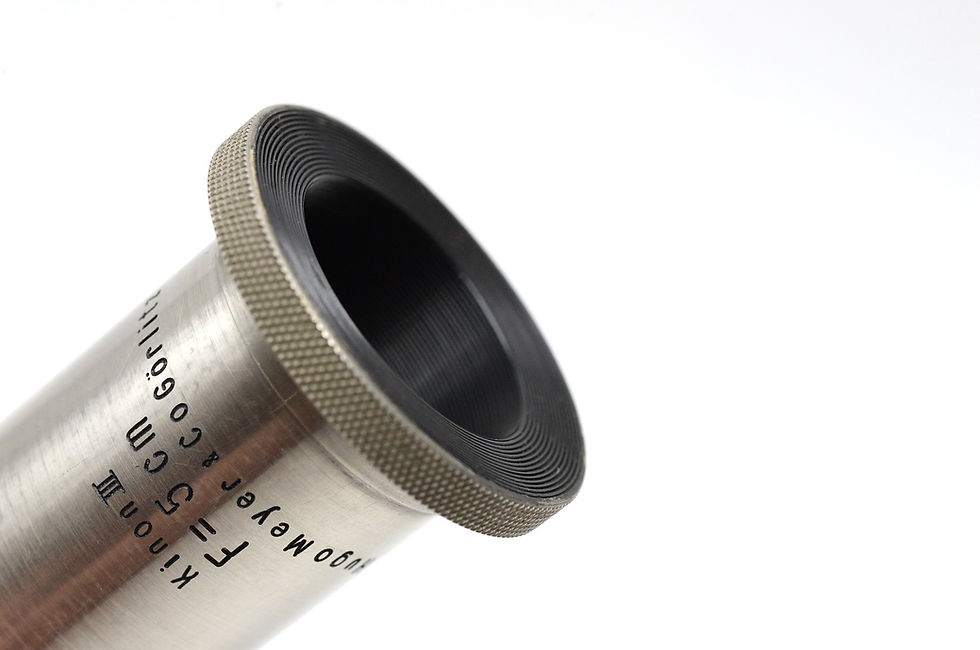
And just like this, we're gliding back to the vintage Meyer Gorlitz family of renowned projector lenses, this time with the youngest of the brethren we've tested so far, called Meyer Gorlitz Diaplan 100mm 1:3, manufactured somewhere in the mid- to late-1950s in East Germany. Unlike the earlier models, this one has a black anodized body, and the slight color change of light reflection from the elements says that it may come with the early models of coating on one or more of the elements. Sources available online say that this Diaplan is designed similarly to the Trioplan, with three elements in three groups.
I can't remember whether I've mentioned this in the previous posts about Meyer Gorlitz or not, but following the WWII when the separation of East and West Germany occurred, like the German people, the the Carl Zeiss factories fell in two separate parts of Germany. The Western part continued production under the name Carl Zeiss, and the Eastern part continued as Carl Zeiss Jena, as the main base of this factory was located in Jena in East Germany. In the next decades after the war, Meyer Gorlitz, which also had fallen in East Germany out of sheer misfortune, was merged with Carl Zeiss Jena et al, and became a part of the state-owned VEB Carl Zeiss Jena. So, Meyer Gorlitz was technically a part of Carl Zeiss before, in a sense, dissolving into state-ownership, that as we know didn't end well for this brand that had been in the business since 1896.
This specific projector lens that we have in hand has copious amounts of dust in it, and a stain that seems to be a fungus trace. You can see the extent of these imperfections in the last photos above. The dust particles can be seen in the flare photos and videos, and the fungus trace seems to have created a halo in the shots; a halo that is not very visible all across every image, but shows up in certain shots. Because of the focal length of this lens, we were not expecting swirliness, but the level of bubble bokeh, or soap bubble bokeh, are acceptable and visible. The image that it creates covers the whole sensor area, and vignetting is minimal, if not nonexistent. Note that like the previous shots, the following photos and videos were taken on a mirrorless Nikon Z7 set on vivid colors, and later on black-and-white. Also, this lens doesn't come with aperture blades, and the shots are taken with the innate aperture to maximize character. Without further ado, I'm hereby inviting you to scroll down and see the shots and videos we've taken.
Color Shots and Bokeh
So, as we expected, there's not much swirliness in the shots below, but the bubbles of the out-of-focus light sources somewhat change form closer to the edges of the frame. You can especially see this in the fourth photo. Sharpness is in my opinion very high considering the condition of the elements of the lens, and although it's not one of the criteria we would use to rank such a vintage projector lens, it's still interesting how sharp it is on account of dust and fungus.
Vintage Meyer Gorlitz Diaplan 100mm 1:3 Projector Lens Bubble Bokeh Sample Shot Vintage Meyer Gorlitz Diaplan 100mm 1:3 Projector Lens Bubble Bokeh Review Sample Shot Vintage Meyer Gorlitz Diaplan 100mm 1:3 Projector Lens Swirly Bokeh Test and Review Photo Vintage Meyer Gorlitz Diaplan 100mm 1:3 Projector Lens Bubble Bokeh Test and Review Sample Shot Vintage Meyer Gorlitz Diaplan 100mm 1:3 Projector Lens Bokeh Test and Review Sample Shot Vintage Meyer Gorlitz Diaplan 100mm 1:3 Projector Lens Bokeh Test and Review Sample Shot Vintage Meyer Gorlitz Diaplan 100mm 1:3 Projector Lens Bokeh Test and Review Sample Shot Vintage Meyer Gorlitz Diaplan 100mm 1:3 Projector Lens Bokeh Test and Review Sample Shot
Black-and-White Photography
The photos in black-and-white don't really have a high contrast. We have seen this in many cases of Meyer Gorlitz projector lenses, so it's nothing we didn't expect (I slightly added contrast to the shots for the sake of aesthetics).
Vintage Meyer Gorlitz Diaplan 100mm 1:3 Projector Lens Bokeh in Black-and-White Sample Shot Vintage Meyer Gorlitz Diaplan 100mm 1:3 Projector Lens B&W Bokeh Sample Shot Vintage Meyer Gorlitz Diaplan 100mm 1:3 Projector Lens Bokeh B&W Photography Vintage Meyer Gorlitz Diaplan 100mm 1:3 Projector Lens B&W Shot
Flare
Like other family members of these lenses, this one doesn't give us any spectacular flare effect. While there's no light refraction, the flare effect is soft. You can see the transformation of flare in a better fashion in the last video below.
Vintage Meyer Gorlitz Diaplan 100mm 1:3 Projector Lens Flare Test and Review
Videos
Here are three videos that we took to demonstrate how this lens works in videography. You can also notice the smooth focusing thanks to the helicoid we used to mount it on our Nikon Z7.

Vintage Meyer Gorlitz Diaplan 100mm 1:3 Projector Lens Sample Video Test and Review
Here's a short video in black-and-white.
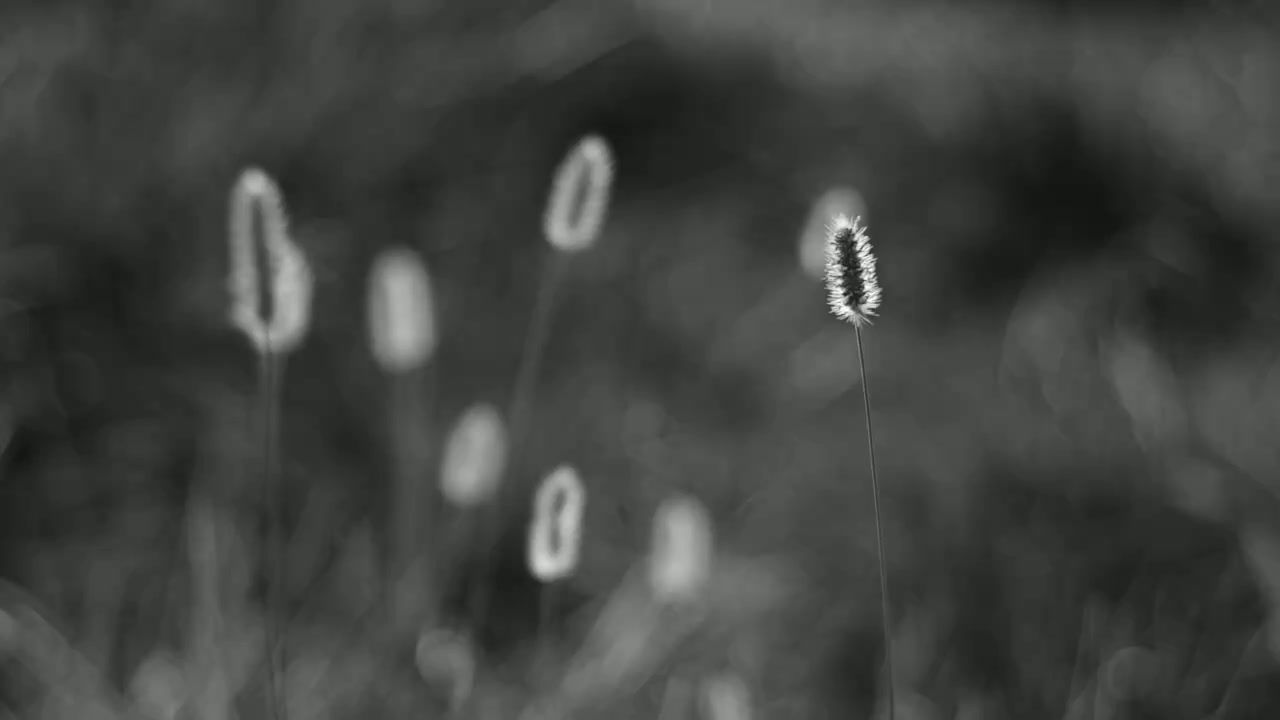
Vintage Meyer Gorlitz Diaplan 100mm 1:3 Projector Lens Videography Test and Review
And last but not least, as I promised earlier, you can see the transformation procedure of the flare effect in different angles in the video below.

Vintage Meyer Gorlitz Diaplan 100mm 1:3 Projector Lens Flare Video Test and Review


Comments