
Polaroid Land Camera Model 150 Lens, 130mm f/8.8 Test and Bokeh Reviews

Updated: Jun 23
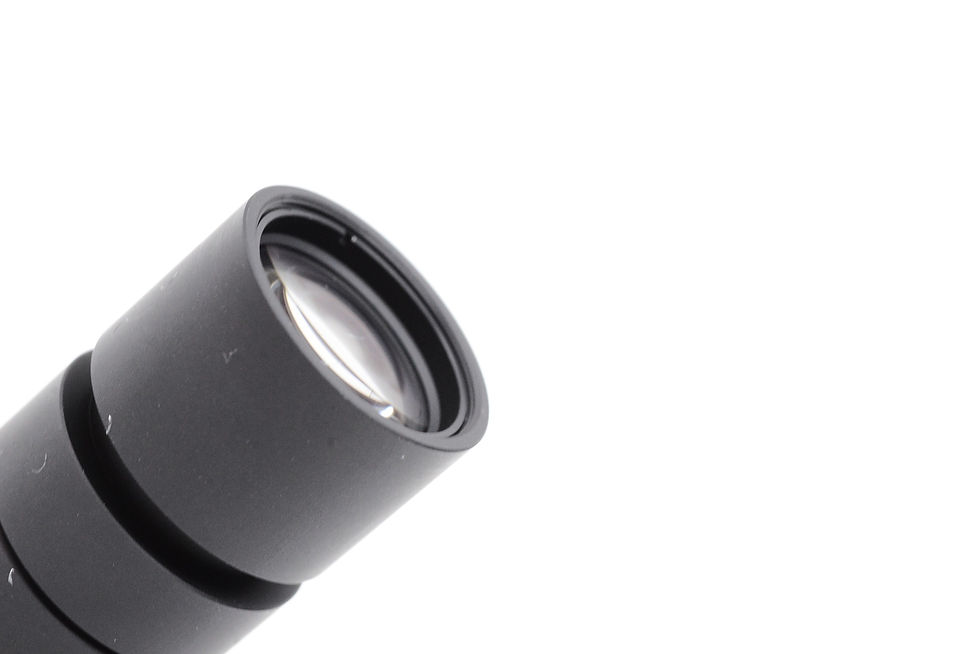
Photo of a Polaroid Land Camera Model 150 Lens 130mm f/8.8
Want to own this lens? |
Here we have a new lens to test and review, which, although not taken out from a projector, is still weird enough to be mounted on a modern-day camera. We're going to review and test the bokeh quality of a 130mm f/8.8 lens removed from a Polaroid Land Camera Model 150. The lens has three elements, and if we take the mount off of it, it will be around 3/4 of an inch thick. This model of camera, with its supposedly undetachable lens, was in production between 1957 and 1960 and used 40-series roll films, which were discontinued back in 1992, making the cameras that use this series useless in the current time. We had to cut off the bellows and the structure holding the lens to safely take it out and install it on a mount, and take photos on a mirrorless Nikon Z7. The procedure of placing it on a mount was a bit tricky, and we had to use copious amounts of tape to make sure it stayed on the mount without falling off. As a result, the idea of mounting it, with its peculiar shape, seemed a bit off in the beginning, but as we took more photos with it, the character that this lens gave to our photos successfully dropped our jaws, making the hassle worthwhile. As you can see in the 100% cropped black-and-white photo below, the 130mm f/8.8 Polaroid Land Camera Model 150 Lens creates a very interesting grain that resembles that of the film photography era.
Grainy Photo from a Polaroid Land Camera Model 150 Lens 130mm f/8.8
In fact, it reminds me of the good old days when I used to take photos on Kodak Tri-X 400 film, and had to wait for the development of the rolls and then print them to see what I had taken at that moment (photography back in the day was a game of patience). This effect is particularly interesting because nowadays a plethora of photography enthusiasts resort to black-and-white film only to create this graininess in their shots. And now, ladies and gents, here you are with an easy solution to create grainy photos on a mirrorless camera without much ado.
This graininess also exists in color photography, as you can see in the 100% cropped photo below.
Grainy Photo from a Polaroid Land Camera Model 150 Lens 130mm f/8.8
I think I will spend some time later to take some black-and-white portraits with this lens and print them out to see what they look like on paper.
Color Shots
With the brief introduction on the magnificent graininess of the shots, we're sliding into the color shots that we took with this lens. It's noteworthy that the image this lens creates thoroughly covers the 35mm full-frame sensor.
Color Photo with Polaroid Land Camera Model 150 Lens 130mm f/8.8 Color Photo with Polaroid Land Camera Model 150 Lens 130mm f/8.8 Bokeh of a Polaroid Land Camera Model 150 Lens 130mm f/8.8 Bubble Bokeh of a Polaroid Land Camera Model 150 Lens 130mm f/8.8 Bokeh of a Polaroid Land Camera Model 150 Lens 130mm f/8.8 Bubbly Bokeh of a Polaroid Land Camera Model 150 Lens 130mm f/8.8
What catches the eye at first glance is how beautiful the bokeh is on this lens on account of an 8.8 f-stop, which, because there are no aperture blades, can't be closed any further. In fact, the bokeh quality seems somewhat impossible for an 8.8 f-stop, but every source that we checked on the World Wide Web said that this is the f-stop of the lens, therefore we take it so. As you see with your own eyes, the out-of-focus light sources create a bubble bokeh with sharp edges, but the bokeh is by no means swirly. The photos that lack any stronger light sources, light reflections, or bright spots that could create bubbles demonstrate a dreamy, even somewhat hazy background while staying perfectly sharp in focused areas.
Black-and-White Shots
I believe that in addition to the unexpected bubble bokeh that this lens creates, the black-and-white photos we get with it are the last awe-inspiring phenomenon that we thought we might get out of such a lens.
Black and White Photo with a Polaroid Land Camera Model 150 Lens 130mm f/8.8 B&W Photo with a Polaroid Land Camera Model 150 Lens 130mm f/8.8 B&W Photo with a Polaroid Land Camera Model 150 Lens 130mm f/8.8 B&W Photo with a Polaroid Land Camera Model 150 Lens 130mm f/8.8
As you see above, the photos are surprisingly high-contrast and sharp, and, all things considered, along with the graininess you saw earlier, one would not doubt that these were shot on film, while the reality is that these photos were taken with a Nikon Z7 mirrorless digital camera. Note that these photos are slightly edited.
Flare
This lens continues to surprise us even when it comes to flares. Look at the colorful rainbow that this lens gives us.
Flare Rainbow of a Polaroid Land Camera Model 150 Lens 130mm f/8.8 Flare of a Polaroid Land Camera Model 150 Lens 130mm f/8.8
While the waves are created most probably because of the ribbed edges of the lens (see the photos of the lens on top of the page), the colorfulness and sharpness of the rainbow effect are phenomenal, and when used in proper settings and forms, such as the vertical photos above, the result is amazing. The flare, however, can make any dust particles on the elements more noticeable, and if you zoom in on the photos, you will see two visible dust particles on the elements.
Video Flare
So, we decided to also include a video to demonstrate the quality of the flare. As you see the video below, the effect is unique, especially that colors of the rainbow are very sharp and strong, although the saturation of the video has not been messed with (the Nikon Z7 camera is still set on vivid colors).

Video shows the rainbow flare that the Polaroid Land Camera Model 150 Lens 130mm f/8.8 Creates
At the end, I'd like to thank you for reading through our blog post. We're trying to make the posts more concise from now on, while keeping them as useful as a reference for rare photography equipment. The photos and shots we share here are a fraction of what we take and archive, so if you're interested in learning more about this lens or seeing more photo samples, feel free to shoot us an email, or write us a comment and ask for more.


Comments