
Meyer Gorlitz Kinon Superior I 1:1.8 f=5cm Projector Lens Review

Updated: Apr 28
Meyer Gorlitz Kinon Superior I 5cm f1.8
Want to own this lens? |
The fourth lens that we're testing is once again from the magnificent Meyer Gorlitz lenses that we have collected. So, welcome to the Meyer Gorlitz Kinon Superior I 1:1.8 f=5cm Projector Lens review and test page!
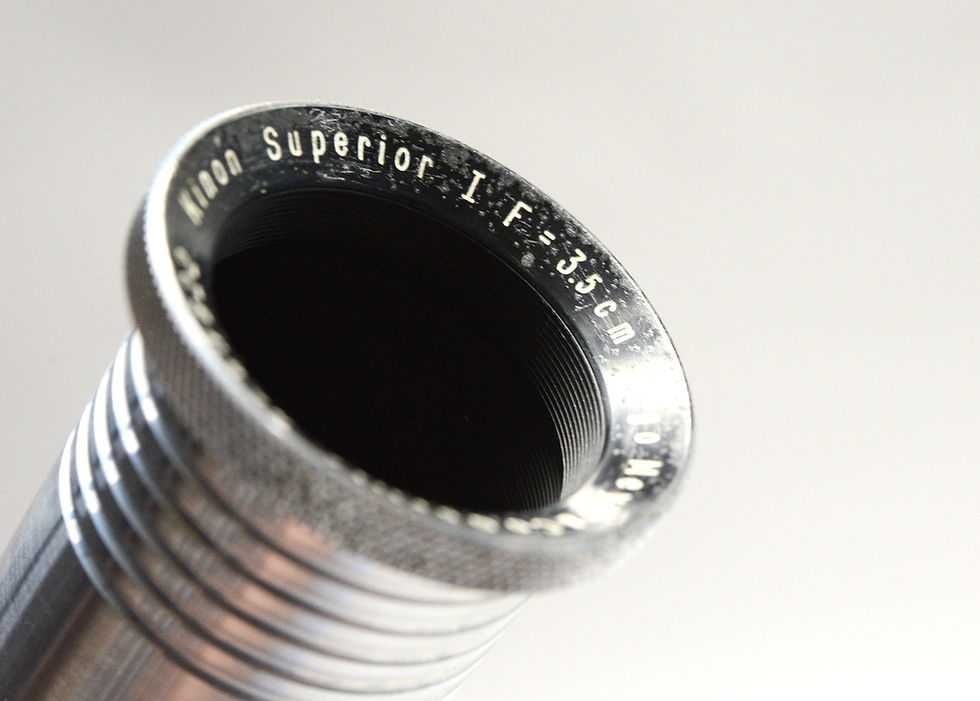
Like other lenses that we've tested so far, this one comes without an aperture, but thanks to the marking on the body, at least we know that it has a f-stop of 1.8. Absent an add-on diaphragm on this lens, we take every image, stills or videos, with the widest aperture. This one's also from the same era as the previous lenses, that is, the 1920s and 1930s, as the coding and standards of its focal length were used prior to WWII. What's important to note about this lens is that, as you can see in the photos above, although scratch-free, its elements come with their own share of dust, and more importantly, fungus. If you have ever held a fungus-stricken lens in your hand, you know that even if you can reach the area where fungi have grown to clean it, the deed is done, and marks are left eternally on the elements. Nevertheless, when it comes to vintage lenses, the presence of fungi or marks left by them is not always that bad; they can give character to the lens and together with possible flaws that were once a byproduct of old machinery, distinguish images as unique works of art. Without further ado, we'll go to the photos and videos that we took with this lens mounted on two Nikon Z7 cameras; one normal and one 830nm modified infrared Z7, by which we took the infrared, deep black and white, or standard infrared stills and videos.
Still Shots
Color Photos
Again, like the previous lenses, the Nikon Z7 camera used to take these photos was set on vivid colors, and the resulting images are edited in the most minimalistic way possible. Also, I'm sharing higher-quality photos so that if you're interested in seeing more details, you can enlarge them and inspect every pixel and nook and cranny of the shots.
The bokeh that this lens gives you is still swirly and smooth on account of the flaws that it comes with. The image is large enough to cover the whole sensor of a full-frame, 35mm camera. Therefore, the vignetting is not as strong as the 3.5cm variety.
Images are sharp in the middle, and the boke swirls on the edges, making the background a brushed work of art.
Sample photo by Meyer Gorlitz Kinon Superior I 1:1.8 f=5cm Projector Lens swirly bokeh Sample photo by Meyer Gorlitz Kinon Superior I 1:1.8 f=5cm Projector Lens swirly bokeh Sample photo by Meyer Gorlitz Kinon Superior I 1:1.8 f=5cm Projector Lens swirly bokeh Sample photo by Meyer Gorlitz Kinon Superior I 1:1.8 f=5cm Projector Lens swirly bokeh Sample photo by Meyer Gorlitz Kinon Superior I 1:1.8 f=5cm Projector Lens swirly bokeh Sample photo by Meyer Gorlitz Kinon Superior I 1:1.8 f=5cm Projector Lens swirly bokeh
Black and White Photography
I don't know if it's only me or everybody likes the black and white stills of these Meyer Gorlitz Kinon Superior lenses. Aside from the quality of the camera we use, the contrast is right, and the shots need very few touches and a bit of modification of the exposure and shadows, then it becomes otherworldly. The background becomes dreamy, separated from the subject, and the curvature on the sides and corners adds to the effect.
As you can see in some of the images below, there's a visible flare from the setting sun that has left an extraordinary mark in the image. We'll talk more abou this in the flare section.
Meyer Gorlitz Kinon Superior I 1:1.8 f=5cm Projector Lens Black and White Photo Sample Meyer Gorlitz Kinon Superior I 1:1.8 f=5cm Projector Lens Black and White Photo Sample Meyer Gorlitz Kinon Superior I 1:1.8 f=5cm Projector Lens Black and White Photo Sample Meyer Gorlitz Kinon Superior I 1:1.8 f=5cm Projector Lens Black and White Photo Sample Meyer Gorlitz Kinon Superior I 1:1.8 f=5cm Projector Lens Black and White Photo Sample
Infrared Photography
The infrared, or deep black and white, photography with this lens creates the same effects of the normal black and white, plus a contrast that adds to the peculiarity of the atmosphere, and makes the photo even more unique.
Meyer Gorlitz Kinon Superior I 1:1.8 f=5cm Projector Lens Deep Black and White Photo Sample Meyer Gorlitz Kinon Superior I 1:1.8 f=5cm Projector Lens Deep Black and White Photo Sample Meyer Gorlitz Kinon Superior I 1:1.8 f=5cm Projector Lens 830nm Photo Sample Meyer Gorlitz Kinon Superior I 1:1.8 f=5cm Projector Lens Deep Black and White Photo Sample Meyer Gorlitz Kinon Superior I 1:1.8 f=5cm Projector Lens Black and White Photo Sample
Videography
Color Videography
See the videos below and enjoy the separation of the subject from the background, smoothness of the transition, and dreamy and swirly bokeh that this lens gives you.

Meyer Gorlitz Kinon Superior I 1:1.8 f=5cm Projector Lens Deep Color Video Sample 
Meyer Gorlitz Kinon Superior I 1:1.8 f=5cm Projector Lens Deep Color Video Sample 
Meyer Gorlitz Kinon Superior I 1:1.8 f=5cm Projector Lens Deep Color Video Sample 
Meyer Gorlitz Kinon Superior I 1:1.8 f=5cm Projector Lens Deep Color Video Sample
Black and White Videography
The shallow depth of field in these videos makes an effect as if these are from a dream - or maybe even a nightmare. I'm contemplating making a short film with these vintage lenses, and who knows? Maybe I'll do it one day.

Meyer Gorlitz Kinon Superior I 1:1.8 f=5cm Projector Lens Deep Black and White Video Sample 
Meyer Gorlitz Kinon Superior I 1:1.8 f=5cm Projector Lens infrared Sample 
Meyer Gorlitz Kinon Superior I 1:1.8 f=5cm Projector Lens infrared Video Sample 
Meyer Gorlitz Kinon Superior I 1:1.8 f=5cm Projector Lens Black and White Video Sample 
Meyer Gorlitz Kinon Superior I 1:1.8 f=5cm Projector Lens 830nm Video Sample
Infrared Videography
See how the background, especially the leaves that reflect the infrared light, adds to the effects that this lens creates, while the azure sky in the background is darkened.

Meyer Gorlitz Kinon Superior I 1:1.8 f=5cm Projector Lens infrared video 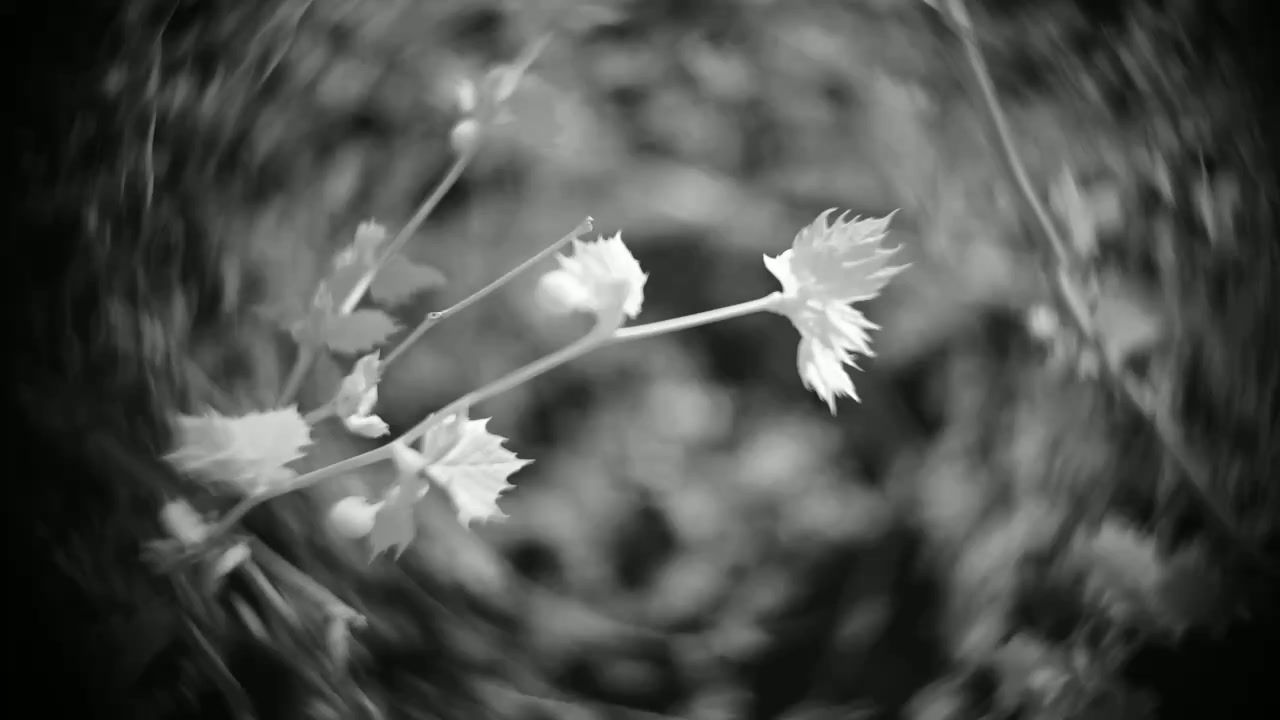
Meyer Gorlitz Kinon Superior I 1:1.8 f=5cm Projector Lens infrared video 
Meyer Gorlitz Kinon Superior I 1:1.8 f=5cm Projector Lens infrared video 
Meyer Gorlitz Kinon Superior I 1:1.8 f=5cm Projector Lens infrared video
Flare
The flare that this lens creates is altered mostly because of the dust particles and fungus on the elements.
Color Flare
These photos were taken in the golden hour of a spring day. The setting sun's rays are broken in the flare, leaving a rainbow in the image, although a partial one.
Meyer Gorlitz Kinon Superior I 1:1.8 f=5cm Projector Lens flare Meyer Gorlitz Kinon Superior I 1:1.8 f=5cm Projector Lens flare Meyer Gorlitz Kinon Superior I 1:1.8 f=5cm Projector Lens flare 
Meyer Gorlitz Kinon Superior I 1:1.8 f=5cm Projector Lens video flare
Black and White Flare
The effect the flare has on the image through this lens is visible in the black and white photo, too. However, since it's in black and white, it lacks the partial rainbow effect that we see in the colorful flares.
Meyer Gorlitz Kinon Superior I 1:1.8 f=5cm Projector Lens black and white flare Meyer Gorlitz Kinon Superior I 1:1.8 f=5cm Projector Lens black and white flare Meyer Gorlitz Kinon Superior I 1:1.8 f=5cm Projector Lens black and white flare
Infrared Flare
Except for the fact that the leaves are brighter in the infrared version of the flare evaluation video, the rest of the impressions are similar.

Meyer Gorlitz Kinon Superior I 1:1.8 f=5cm Projector Lens infrared flare


Comments